Lesson 6 · 7 min
Camera Angles and What They Communicate
Eye level feels natural, high feels small and safe, low feels powerful. Choose the angle on purpose.
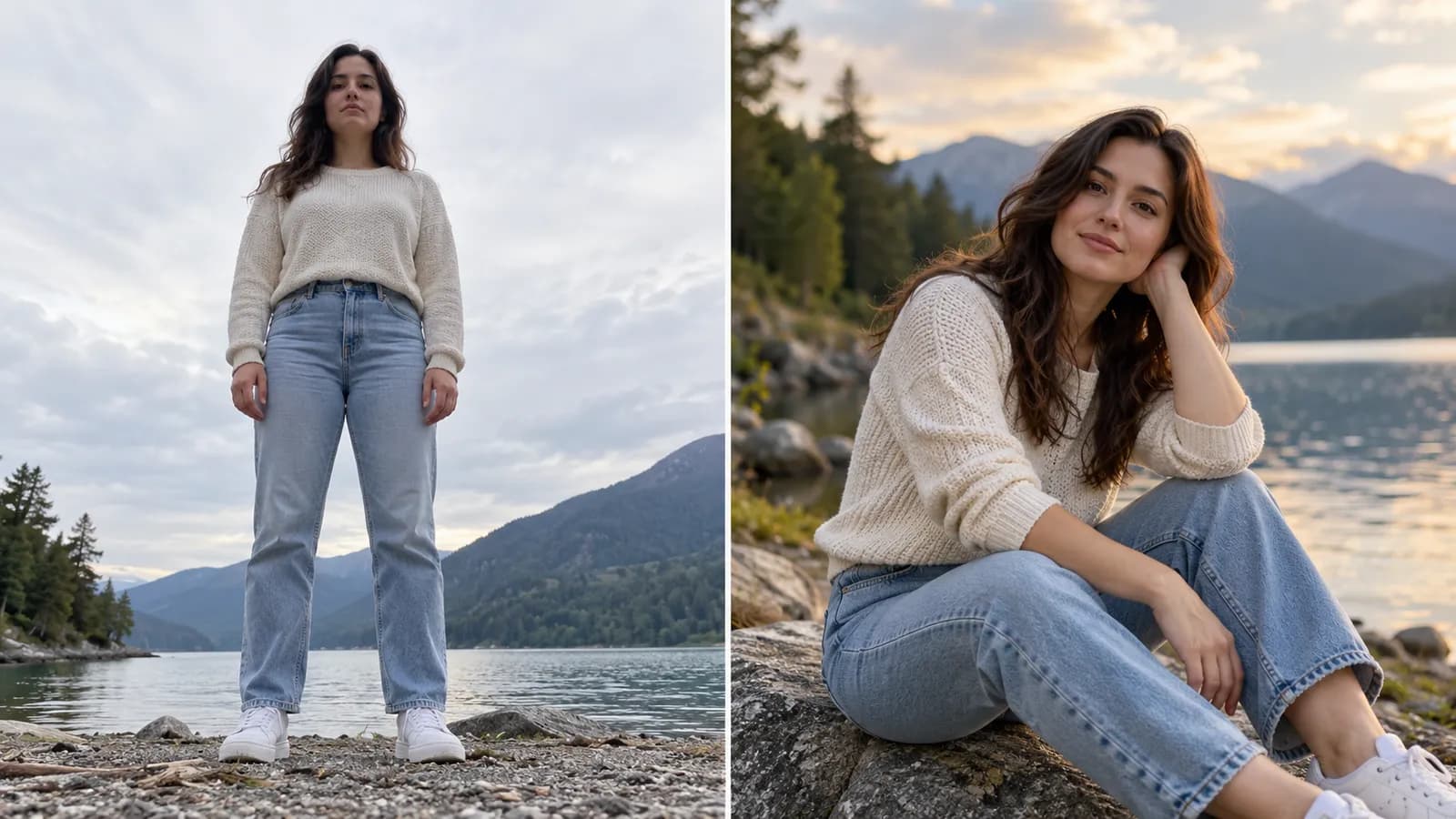
In this lesson: how the height of the camera changes the way a person looks and feels. Why it matters on an HNC shoot: most clients cannot say why one photo of them feels right and another feels wrong, but the camera angle is very often the reason. Choosing the angle on purpose is one of the quickest ways to make clients look the way they hope to look.
Why angle matters
When you look at someone in real life, you usually look at them from about the same height, eye to eye. A camera angle copies that or changes it, and the viewer reads the change as a feeling. Looking up at someone makes them seem big, strong and important. Looking down at someone makes them seem smaller, younger or less sure. These are things people feel without thinking, in photos exactly as in life.
The three angles
Eye level: natural and honest
The camera is at the same height as your subject's eyes. The photo feels honest, calm and connected, like a conversation. It is the safest choice and works for nearly every client, so make it your starting point. For a standing adult, that means holding the phone around chest to face height. For a child, kneel or crouch so you are at their eye level, not looking down at the top of their head.
High angle: smaller, softer and safe
The camera is higher than the eyes, looking down. The subject looks smaller and more vulnerable. A slight high angle, with the camera a little above the eyes and tilted down gently, is the secret of many flattering portraits. It lengthens the neck, brings the eyes forward and tends to look good on faces. A very high angle (looking sharply down from above) can make a person look small, young or weak, so use it for playful or cute photos, not for someone who wants to look confident.
Low angle: tall, strong and dominant
The camera is lower than the eyes, looking up. The subject looks tall, strong and powerful, and a low angle can make a very dramatic photo. For faces it is usually unflattering, because it looks up the nose, emphasizes the chin and the underside of the jaw, and can make the neck look thick. Use a low angle for a full-length "hero" shot, a graduation gown, a jump or a building, but not for a close-up portrait of a face.
What this means for portraits
For portraits, shoot at eye level or slightly above. That is the rule that works for almost everyone.
Quick checks:
- If your client looks smaller or sad: you may be too high. Lower the phone a little.
- If you can see up their nostrils or under their chin: you are too low. Raise the phone.
- If they have a double chin in the photo: raise the phone slightly and ask them to push their forehead gently toward the camera and tilt their chin down a little.
- If your client is short or tall compared with you, change your own height instead of asking them to stand differently. Bend your knees, or stand on a step.
Angles and the clutter behind them
Changing your height also changes what appears behind your client. A slightly lower angle can hide a messy ground. A slightly higher angle can hide a busy skyline or a bright sky. Before you decide, try one frame at eye level and one slightly different, and choose the cleaner background.
Common mistakes and how to avoid them
- Shooting everyone from your own standing height. Adjust to each client's eye level, especially for children.
- A very low angle on a close-up face. Raise the phone to eye level.
- A very high angle on a client who wants to look confident. Lower the phone.
- Tilting the phone so lines lean. Keep the phone level when there are buildings or doorframes in the picture.
- Staying in one position for the whole shoot. Walk around, crouch and step up. Changing the angle is free variety.
Key takeaway
For portraits, shoot at eye level or a little above, and use high or low angles only when you want the feeling they create.
Want to save your progress? Sign up as a photographer.